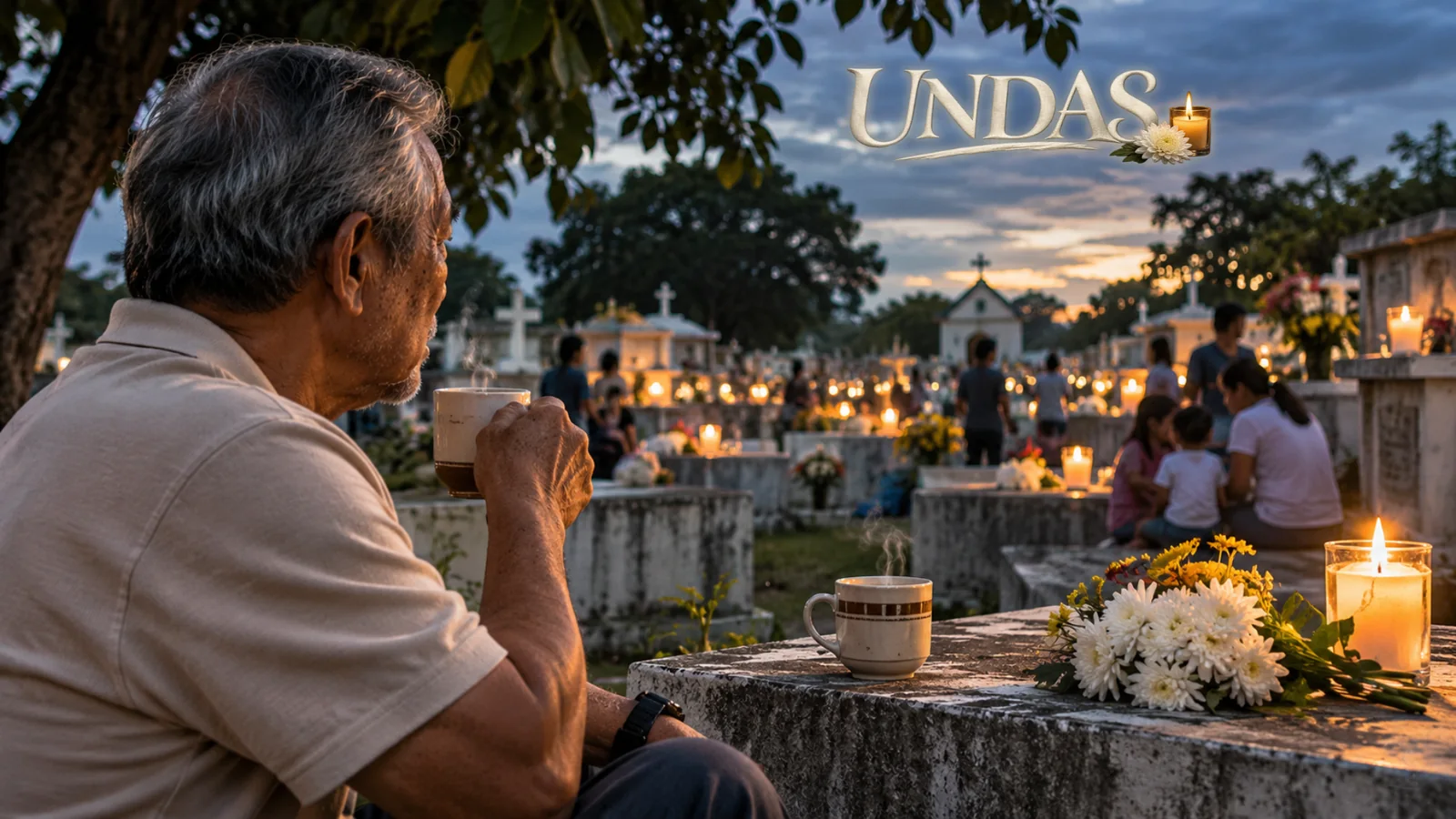
HINDI LANG SA PANGALAN
MOOSEWIRE | Society and Culture
There are people we are not related to by blood, but we call them brothers or sisters. But what does that word really mean?
More Than Just a Name
In the Philippines, the idea of brotherhood is nothing new.
It can be seen in fraternities, sororities, motorist groups, community organizations, and even circles of friends formed over time.
These groups have their own names, colors, symbols, and traditions. For many members, they stand for unity, friendship, and promises that are not easily forgotten.
But there is one question that matters more than any name or symbol:
When all of that is taken away, what remains?
If there is no uniform, no emblem, no title, and no one else watching—do they still treat each other as brothers or sisters?
This is where the story of HINDI LANG SA PANGALAN begins.
The Kapatid Who Shows Up Without Being Asked
It is easy to say, “You are my brother.”
It is harder to prove it when someone is in need.
Imagine someone who has lost a job. Or a family with a member in the hospital. Or a friend who is quietly struggling but does not want to ask for help.
In moments like these, no grand speech is needed.
Sometimes, it is enough that someone knocks on the door.
Someone brought food. Someone gave a little help. Someone made time to listen.
There is no need for a photo. No need for a social media post. No need to announce it to the whole group.
And certainly no need to hold it over someone later as utang na loob—an obligation to repay the favor.
There is nothing wrong with recognizing the good that an organization does. In fact, it may even encourage others to help.
But there is a difference between helping because someone is in need and helping because someone is watching.
The first is compassion.
The second can become a way of showing off if recognition matters more than the person being helped.
Not All Brothers and Sisters Are Related by Blood
Some friendships are formed in school. Some groups begin at work, in the community, or through a shared interest.
Over time, people who once simply knew each other become people they trust.
Not because they came from the same place.
Not because they believe the same things.
But because there were moments when they chose to stand beside one another.
For some, this kind of brotherhood or sisterhood becomes an important part of life.
Some people find support and a sense of belonging in a group—especially when they are far from family or going through a difficult time.
But trust is not automatically formed the moment a new member is accepted.
Membership can be given in a day. Being a true brother or sister is proven over time.
When Your Brother or Sister Is Wrong
This may be the hardest test of any brotherhood.
What if someone you consider a brother or sister does something wrong?
Will you defend them just because they belong to your group?
Will you stay silent so your friendship will not be damaged?
Or will you talk to them, even knowing they may get angry?
We often hear the words loyalty, solidarity, and no one gets left behind.
These are good principles when they are used to support someone in need.
But loyalty becomes a problem when it starts to mean agreeing with everything a brother or sister does.
Correction is not betrayal.
Refusing to join in wrongdoing is not disrespect.
And telling the truth does not mean you have turned your back on the group.
In fact, stopping a friend before they hurt someone else—or before they fully destroy their own life—may be a greater act of care.
As the song says:
“Agreeing with someone isn’t always an act of love.”
It is not easy to say, “That is wrong,” to someone who matters to us.
But sometimes, that is exactly what they need to hear.
We Don’t All Have to Think Alike
Brotherhood also does not mean everyone has to think alike.
People may differ in politics, religion, work, or life decisions.
There may be misunderstandings.
There may be times when both sides need to give each other space.
A strong group is not one without arguments.
What matters more is how it deals with disagreement.
Is there still respect when opinions differ?
Can a member who disagrees still speak up?
And when someone makes a mistake, is there room for accountability and change?
Unity does not mean giving up the ability to think for yourself.
Brotherhood is stronger when it is built on trust, not on fear of disobedience.
In the End, It Is in the Deed
There is nothing wrong with taking pride in the name of a group.
There is nothing wrong with valuing the symbols, traditions, and friendships formed within it.
For many people, these are part of their identity and important memories.
But a name alone is not enough to prove character.
A promise of no one gets left behind is not enough if people disappear when things get hard.
The word brother is not enough if it is not accompanied by care, respect, and accountability.
Because in the end, true brotherhood is not measured by the number of members, the size of the gathering, or the strength of a group’s shout.
It is measured in the simple moments when someone is in need—and another person steps forward on their own.
In the moments when someone makes a mistake—and another cares enough to tell the truth.
And in the times when no one else is watching, but the right thing is still chosen.
Not just in name.
Not just in color.
True brotherhood lives through action.
💬 MOOSE QUESTION
For you, what is the most important quality of a true brother or sister?
Always being there? Loyalty? Or the courage to tell you when you are wrong?
Share your view. Our answers do not have to be the same.
Walang Mukha. Puro Kwento.
Ano ni Moose?